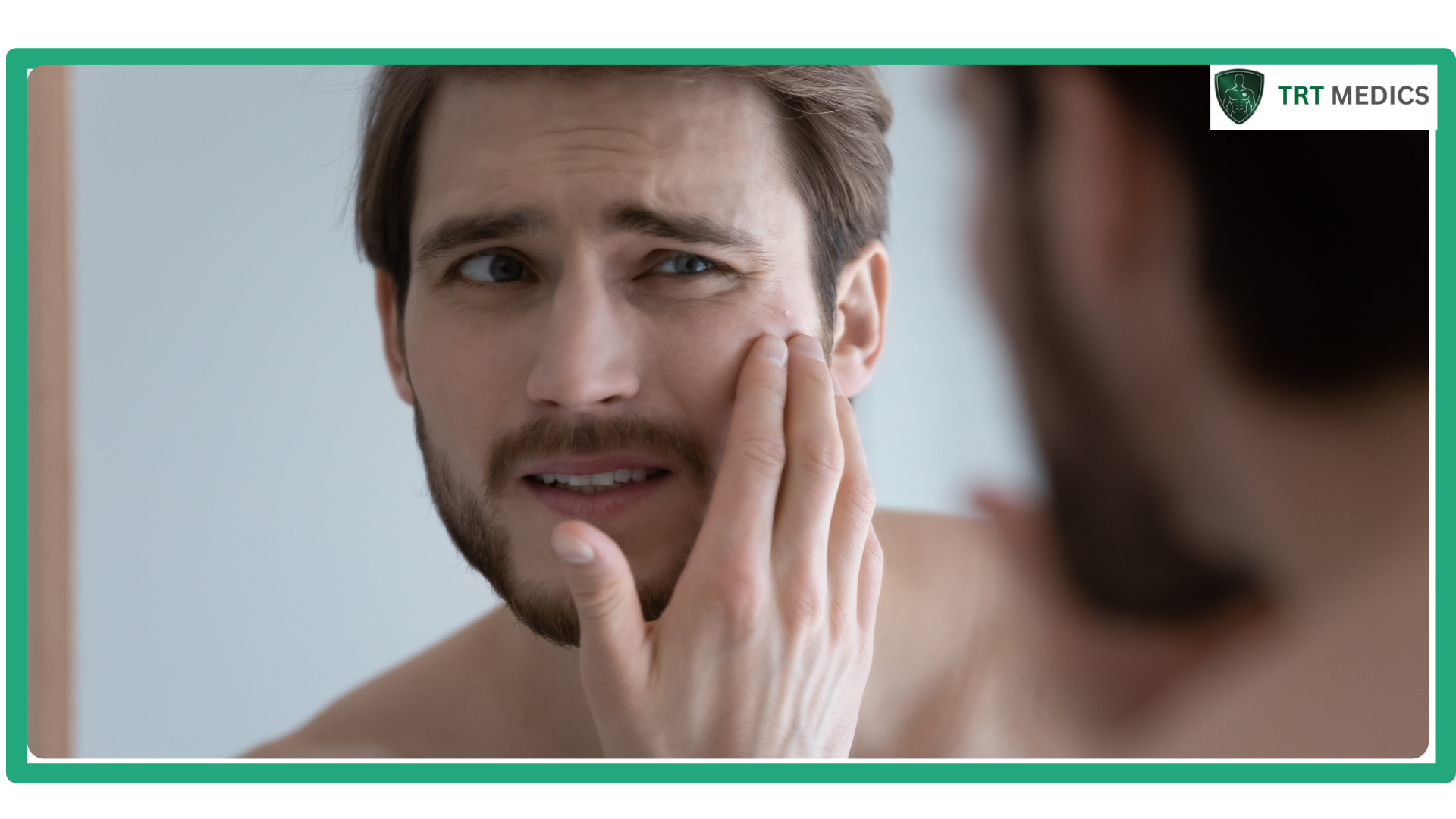
You wake up in the morning and look in the mirror. You see a big, red pimple on your chin or back. It feels frustrating because you are not a teenager anymore. You thought you were done with this years ago. Many men deal with adult acne. It is more common than you might think. If you are fixing your hormone levels, you might notice changes in your skin. This leads to a very big question. Does high testosterone cause acne in men?
The short answer is yes, it can happen. But the story is a little bit more complicated than just having high levels. Often, it is not just the amount of hormone that matters. It is how your body handles changes.
At TRT Medics, we understand how hormones work. We are a specialized hormone clinic that looks at your whole health. We want you to feel great and look great too. In this article, we will explain why your skin is breaking out. We will also tell you how to fix it.
The Science: Why Hormones Trigger Breakouts
To understand your skin, we have to look inside your body. Your body is like a complex machine. Hormones are the messengers that tell the machine what to do. Testosterone is the main hormone for men.
However, testosterone does not work alone. Inside your body, it converts into something else. It turns into a stronger hormone called Dihydrotestosterone, or DHT for short. This conversion happens naturally.
DHT is very powerful. It sends strong signals to your skin. Your skin has tiny holes called pores. Inside these pores, there are small glands. These glands produce oil to keep your skin soft. This oil is called sebum.
When DHT levels go up, it tells these glands to work overtime. They start making way too much oil. Your skin gets shiny and greasy. This excess oil can get trapped inside the pore.
Here is exactly how a pimple forms:
- Step 1: Testosterone turns into DHT.
- Step 2: DHT tells oil glands to get bigger.
- Step 3: The glands make too much oil.
- Step 4: Oil mixes with dead skin cells and blocks the pore.
- Step 5: Bacteria grow in the trapped oil and cause a pimple.
This process is natural. But when hormones change, the process speeds up. That is why understanding the science helps you treat the problem.
Is It High Levels or Fluctuations?
Many people blame high testosterone for everything. But that is not always fair. You can have high levels and clear skin. The real trouble usually starts when levels change too fast.
Imagine you are driving a car. If you drive at a steady speed, the ride is smooth. If you slam on the gas and then the brakes, the ride is bumpy. Your hormones work the same way.
When you start hormone therapy, your levels might go up quickly. This sudden spike surprises your body. Your skin reacts by making a lot of oil at once. This is why many men see breakouts when they first start treatment.
This brings us back to our main question. Does high testosterone cause acne or is it the fluctuation? Usually, the fluctuation is the bigger trigger. Stability is the key to clear skin.
Genetics also play a huge role here. Some men are just more sensitive to DHT. You might have a friend with high testosterone who has perfect skin. That is because his genes are different.
If your father had bad acne, you might be more likely to get it too. Your skin receptors might be very sensitive to hormonal messages. This doesn’t mean you can’t fix it. It just means you have to be careful.
Managing Your Skin While Optimizing Hormones
The good news is that you can manage this. You don’t have to choose between feeling strong and having clear skin. There are simple steps you can take every day.
First, look at your hygiene routine. You need to keep your pores clean. Use a gentle face wash twice a day. Look for products that say “non-comedogenic.” This is a fancy word that means “won’t clog pores.”
If you exercise, you must shower right away. Sweat can mix with the oil on your skin. This creates the perfect home for bacteria. A quick shower after the gym can save you from back acne.
There are also medical tweaks that can help. Sometimes, changing how often you take your medication helps. If you take a large dose once in a while, your levels spike. Taking smaller doses more often can keep levels steady.
This keeps your hormones from riding a roller coaster. Stable hormones usually mean calmer skin. You can also look at supplements like Zinc. Zinc helps reduce inflammation in the skin.
Always talk to your doctor before changing anything. They might suggest a special cream or wash. Small changes can make a massive difference in how you look.
Comprehensive Hormone Care at TRT Medics
Fixing your hormones shouldn’t be a guessing game. You need a team that watches over you. At TRTmedics.com, we don’t just give you medicine. We give you a complete plan.
We have designed our services to be easy and effective. We want to remove the stress from your healthcare. Here is how our expert physicians can help you today.
Personalized TRT Plans
We have made starting therapy very simple. Our Testosterone Replacement Therapy – New Patient plan is just $249. This is not just a prescription. It is a full service. You get a monthly telemedicine consultation with our expert doctors. We also send you a one-month supply of the necessary medicine. It is expert care tailored just for you.
Once you are started, sticking with it is easy. Our Testosterone Replacement Therapy – Refills cost $149. This ensures you never run out. You get another month of telemedicine support and your treatment supply. We monitor you closely to prevent side effects like acne.
Enclomiphene for Natural Balance
Maybe you want to boost your levels naturally. We have an option for that too. Our Enclomiphene service is $199. This medication helps your body make its own testosterone. It is great for men who want to preserve their fertility. We include a telehealth visit with a licensed provider. They will look at your symptoms and lab results to see if this is right for you.
Nutritional Guidance for Skin & Health
Your diet affects your skin more than you think. That is why we offer a Consultation with a Nutritionist for $99. You get a 45-minute session with a Certified Holistic Nutritionist. This is perfect for patients on any treatment plan. They will help you plan your meals. They can teach you which foods might be making your acne worse.
When to Seek Professional Help
Sometimes, a face wash is not enough. You need to know when to ask for help. Mild acne is annoying, but severe acne is painful.
Watch out for deep, painful bumps under your skin. These are called cysts or nodules. They can leave scars if you pick at them. If you see these, do not wait.
You should also seek help if acne is hurting your mood. If you feel embarrassed to go out, it is time to act. Your mental health is very important.
Remember, does high testosterone cause acne that needs medical treatment? In some cases, yes. A doctor can give you stronger medicine to fight the bacteria. They can also adjust your hormone protocol to help your skin.
You do not have to fight this battle alone. Professional advice is just a click away. You can schedule a free consultation with us. We can look at your specific situation and find a solution.
Conclusion
Acne is a common problem for men. It can feel like a step backward when you are trying to move forward. But it is just a sign that your body is changing.
We have answered the big question: does high testosterone cause acne? We know that hormones, fluctuations, and genetics all play a part. It is a mix of biology and chemistry.
The most important thing is that it is treatable. You can have optimized hormones and clear skin. It just takes a little bit of patience and the right plan.
Keep your skin clean and stay consistent with your treatment. Listen to your body and watch for reactions. With the right team behind you, you can look your best.
If you are ready to take control of your health, reach out to us. We are here to guide you every step of the way. Contact us today to get started on your journey to better health.
Sources:
- National Institutes of Health (NIH) – Testosterone and Skin Health
https://pubmed.ncbi.nlm.nih.gov/22152002/ - PubMed – The Role of Androgens in Sebum Production
https://pubmed.ncbi.nlm.nih.gov/18456411/