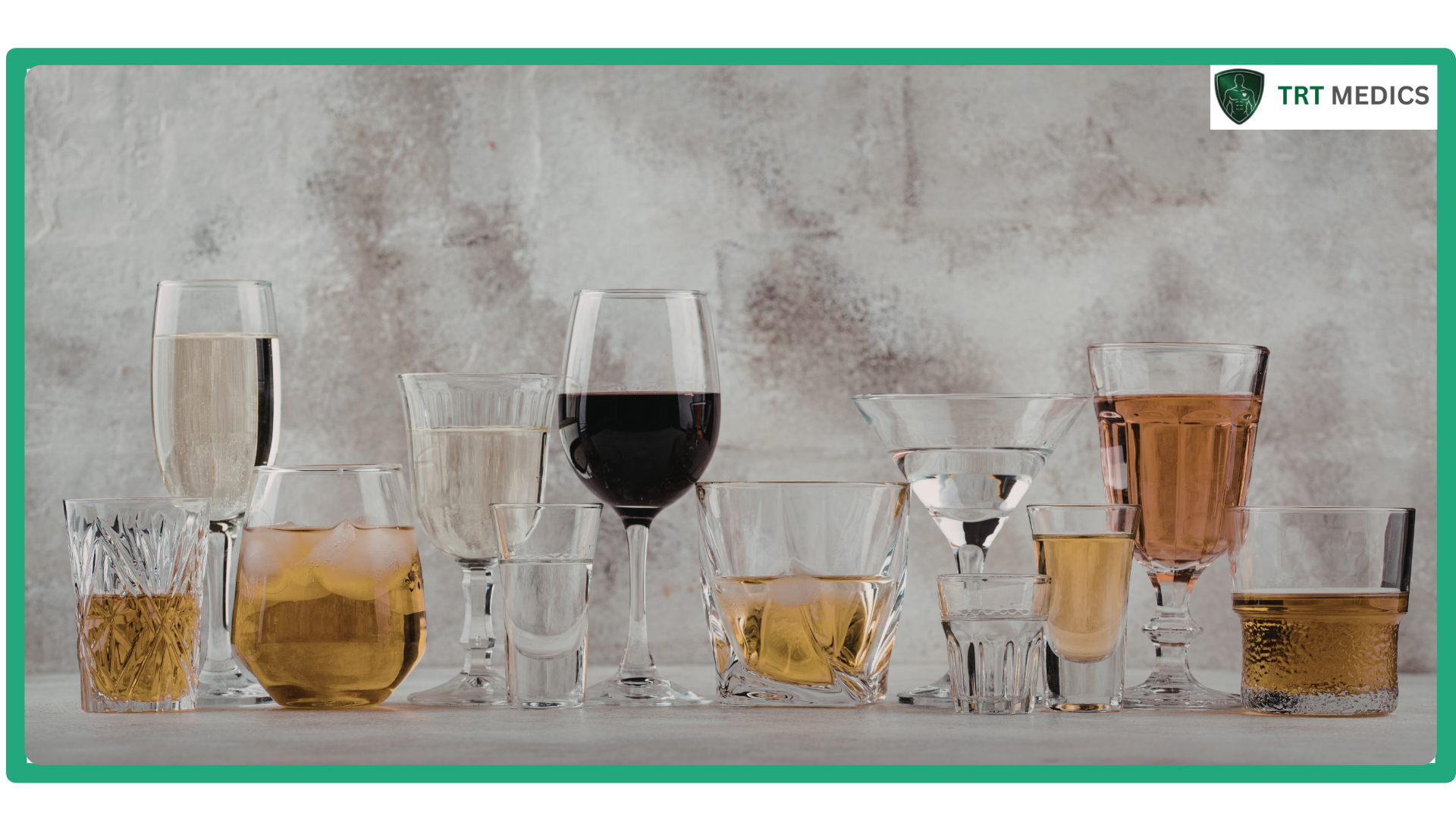
So, you’ve started Testosterone Replacement Therapy (TRT) and you’re feeling great. But then a question pops into your head: “Can I still have a beer with my friends on the weekend?” That’s a really common and smart question to ask. You want to enjoy your life, but you also want to get the best results from your treatment. This guide will give you clear and simple answers. We’ll talk about alcohol and testosterone replacement therapy so you can make good choices for your health without having to hide from your social life.
How Does Alcohol Affect Testosterone in General?
Before we even talk about TRT, let’s look at what alcohol does to testosterone on its own. Even in men who are not in therapy, alcohol can have a big effect.
Here’s how it works:
- It Can Lower T-Levels: Drinking a lot of alcohol can tell your body to slow down making its own testosterone. It messes with the signals from your brain that are needed to produce hormones.
- It Can Increase Estrogen: Your liver is like a filter for your body. When you drink, the liver gets busy cleaning out the alcohol. This means it can’t do its other jobs as well, like getting rid of extra estrogen.
- It Can Disrupt Sleep: You might think a drink helps you fall asleep, but it actually hurts your sleep quality. Good sleep is super important for making hormones, including testosterone.
So, you can see that alcohol and testosterone levels are already linked, even without TRT in the picture.
Mixing Alcohol and Testosterone Replacement Therapy: What You Need to Know
Now, let’s add TRT to the mix. What happens when you drink while you are in therapy? Let’s break it down.
Does Alcohol Stop TRT From Working?
Here’s the good news: having one or two drinks is not going to stop your TRT from working. Your therapy will still do its job.
But if you drink heavily all the time, you might be working against your own goals. TRT helps you build muscle and lose fat, but too much alcohol can make you gain weight and feel tired. So, you’d be taking one step forward with TRT and one step back with alcohol.
The Impact on Your Liver
Your liver is a very important organ that works hard every day. It has to process everything you put into your body, including your TRT medication and any alcohol you drink.
Modern TRT, like injections, is very safe for your liver. But when you drink a lot of alcohol, you are giving your liver a second job to do. This extra strain is not good for your long-term health. It’s best to be kind to your liver.
Dehydration and Side Effects
Alcohol is known to dehydrate you, which means it pulls water out of your body. This is why you can feel so thirsty after a night out.
Being dehydrated can make you feel tired and sluggish. It can also sometimes make potential TRT side effects feel worse. Staying hydrated by drinking plenty of water is always a good idea when you are thinking about alcohol and testosterone replacement therapy.
Practical Tips for Drinking Safely on TRT
This is not about telling you that you can never have a drink again. It’s about being smart so you can stay healthy and social.
Here are a few easy tips:
- Moderation is Everything: The most important rule is to not overdo it. For most men, this means one or two drinks in a day, and it’s a good idea to have some days with no alcohol at all.
- Choose Your Drinks Wisely: Some drinks are better than others. A light beer or a simple drink like vodka with soda water is much better than a sugary cocktail or heavy beer full of calories.
- Timing Matters: Try not to drink a lot on the same day as your injection. And always, always drink plenty of water when you are having alcohol.
- Listen to Your Body: Pay attention to how you feel. If you notice that even one drink makes you feel tired or unwell, it might be best to skip it.
Building a Supportive Health Plan for Optimal Results
Making smart choices about things like alcohol is just one part of the big picture. The real goal is optimizing your health so you can feel amazing for the long run. A great TRT program will help you with your whole lifestyle.
For example, here is what a supportive and complete health plan can look like:
First, you’ll get a strong start. A new patient program, often around $249, will give you a full consultation with a doctor and your first month of medicine. This makes sure your plan is made just for your body and your lifestyle from day one.
Then, you need consistent support. An ongoing monthly plan, usually around $149, covers your refills and regular check-ins with your doctor. This is the perfect time to ask questions about real-life things, like drinking alcohol.
Sometimes, you might want extra guidance. Because what you eat and drink is so important, a 45-minute talk with a nutrition expert for about $99 can be a huge help. They can give you a personalized plan to help you get the most out of your therapy.
A good clinic also has different options for different needs. For example, some men might want a medicine like Enclomiphene, which can be offered for around $199. This shows the clinic is focused on your specific goals.
Honesty with Your Doctor is Non-Negotiable
The most important tip of all is to be honest with your doctor. Tell them about your drinking habits. They are not there to judge you.
Your doctor needs to have the full picture of your lifestyle to keep you safe and healthy. Think of them as your health partner. Our medical professionals are here to help you succeed on your journey.
Conclusion
So, let’s go back to our first question. Can you have a drink while on TRT? The answer is yes, but it’s all about being smart and responsible.
Balancing alcohol and testosterone replacement therapy is completely possible. A healthy lifestyle is not about perfection; it’s about making good choices most of the time. Choosing moderation will help you enjoy your social life while still getting all the amazing benefits of your therapy.
If you want to talk about your specific situation, you can book a free, no-obligation consultation. Or, if you have more questions, please send us your questions.
Sources:
- National Institute on Alcohol Abuse and Alcoholism (NIAAA) – Alcohol’s Effects on the Endocrine System