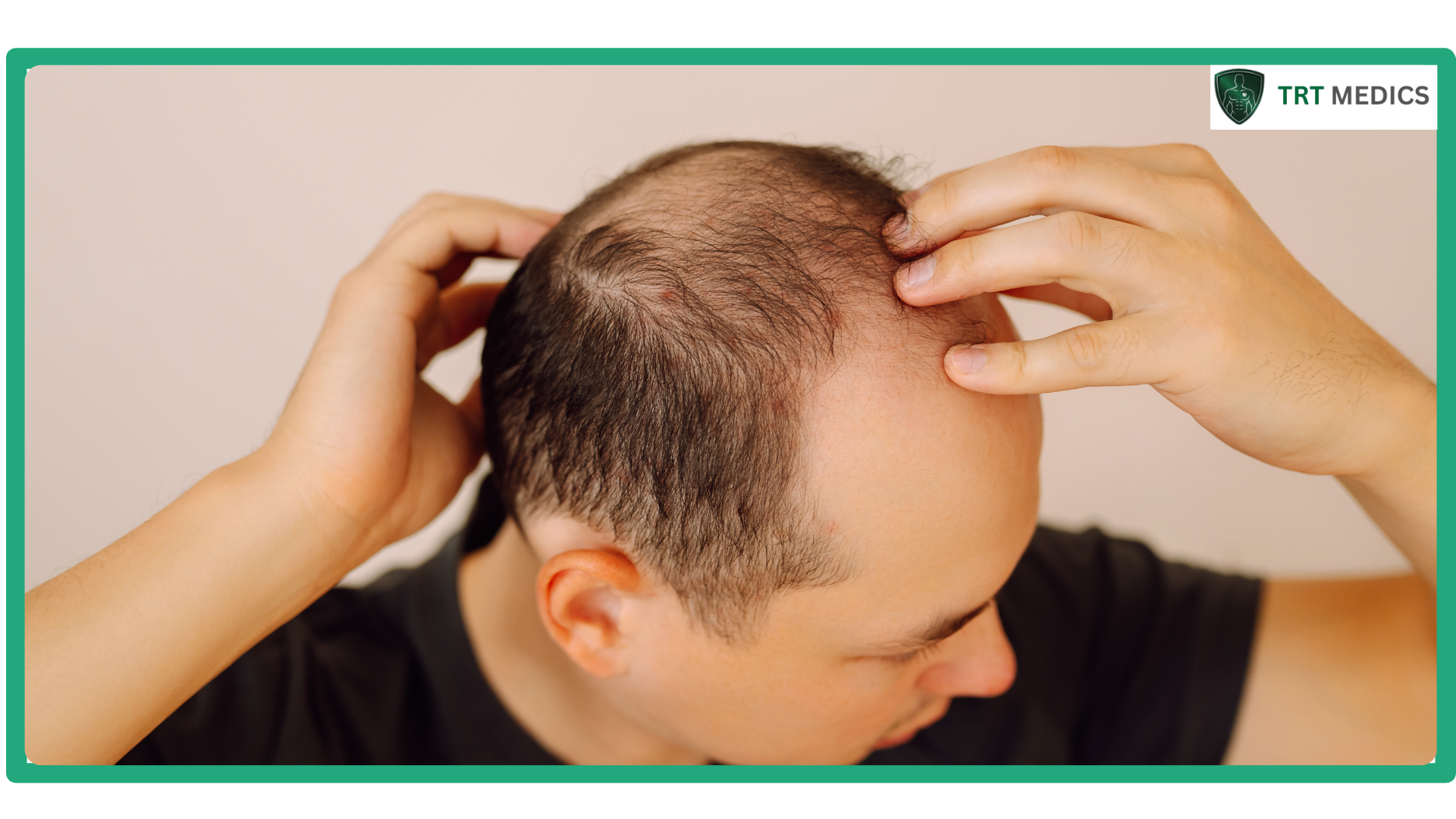
Thinking about starting Testosterone Replacement Therapy (TRT) is a big step toward feeling like yourself again. But you might have a nagging worry in the back of your mind about your hair. It’s a really common concern for a lot of men. You’re likely asking, Does testosterone replacement therapy cause hair loss? It’s a fair question, and you deserve a straight answer. We’re here to clear up the myths and give you the real story, using simple words that make sense.
The Real Culprit Behind Hair Loss: Genetics and DHT
Here’s the first thing you need to know: TRT is not the direct bad guy in the hair loss story. The real reason for hair loss is usually a team-up between your family genes and a hormone called DHT.
Let’s break down what those two things are and how they work together. Understanding this is the key to knowing how TRT might affect you.
What is DHT?
Your body has testosterone, which you’ve already heard about. But your body also turns some of that testosterone into a different hormone called Dihydrotestosterone, or DHT for short. You can think of DHT as a much stronger version of testosterone.
DHT is not all bad; it’s important for some things when you are growing up. But when it comes to hair, DHT can cause problems for some men. It can attach to the tiny pockets in your scalp where hair grows from, called hair follicles, and cause them to shrink. You can learn more about DHT from health experts at the National Library of Medicine.
The Genetic Link: It’s All in the Family
Here’s the most important part: DHT only causes hair loss in men who have a certain family gene for it. This is what people call male pattern baldness.
Look at your family tree. If your father, grandfathers, or uncles lost their hair, you might have the gene for it, too. If you don’t have this gene, then DHT won’t have much of an effect on your hair.
So, TRT does not give you the gene for baldness. It can only speed up hair loss if that gene was already there to begin with. The American Academy of Dermatology explains that heredity is the most common cause of hair loss.
So, How Does TRT Fit Into This Picture?
Now you know about genes and DHT. So where does TRT come in? It’s pretty simple. When you start TRT, your testosterone levels go up to a normal, healthy range.
Because you have more testosterone in your body, it makes sense that your body might also make a little more DHT. This is just a natural process. So, does testosterone replacement therapy cause hair loss? It can, but only if your hair follicles are already sensitive to DHT because of your family genes.
If you don’t have the gene for male pattern baldness, you are very unlikely to lose your hair from TRT. The therapy doesn’t create the problem; it just gives a little push to something that was probably going to happen later in life anyway.
The Key to Safety: Medical Supervision
This is why it is so important to never do TRT on your own. Having a real doctor guiding you is the key to doing it safely and managing any side effects.
A good doctor will talk to you about your family history. They will monitor your hormone levels with blood tests to make sure everything is in a healthy range. They are your partner in this journey, and their job is to help you get the benefits while keeping the risks as low as possible. This is a core part of our patient-first philosophy.
Your Health, Your Choice: A Transparent Approach at TRT Medics
At trtmedics.com, we believe you should never have to guess about your health or your budget. That’s why we offer a clear, straightforward path to treatment.
-
For new patients, our comprehensive monthly package is $249, which includes your telemedicine consultation with an expert physician and your first month’s supply of medication.
-
There are no surprise costs. Continuing your journey is just as simple, with monthly refills and doctor check-ins priced at $149.
-
We also understand that your overall health matters, which is why we offer a $99 consultation with a Certified Nutritionist to help align your diet with your wellness goals.
-
For those exploring different avenues, treatments like Enclomiphene are available for $199 after a physician determines it’s the right option for you.
Myths vs. Facts: What You Need to Know
There is a lot of bad information on the internet. Let’s clear up some of the biggest myths about TRT and hair loss.
Myth: TRT will definitely make you go bald.
Fact: Not true. TRT only speeds up hair loss in men who already have the family gene for male pattern baldness. Many men on TRT see no change in their hair at all.
Myth: Every single person who takes TRT loses their hair.
Fact: False. Whether you lose hair depends completely on your personal genetics. It is not a guaranteed side effect for everyone.
Myth: If you start losing hair, there is nothing you can do.
Fact: A good doctor will work with you. They can monitor your hormone levels and talk to you about different strategies to help manage any potential side effects. Experts at Harvard Health also discuss ways to manage DHT.
Conclusion
So, let’s sum it all up. TRT is not the main villain in the hair loss story. Your family genetics holds the most important cards. The therapy can’t create the problem, but it can sometimes speed it up if the problem was already there.
For many men, the amazing benefits of TRT are worth the small and manageable risk of hair loss. Feeling full of energy, having a better mood, and enjoying life again is incredibly important. So when you ask, does testosterone replacement therapy cause hair loss, remember that the answer is all about your genes and the importance of great medical care.
Worried about the potential side effects of TRT? Schedule a free, no-pressure consultation with our medical team to get your questions answered.
Sources:
- National Library of Medicine – Dihydrotestosterone (DHT): https://www.ncbi.nlm.nih.gov/books/NBK557634/